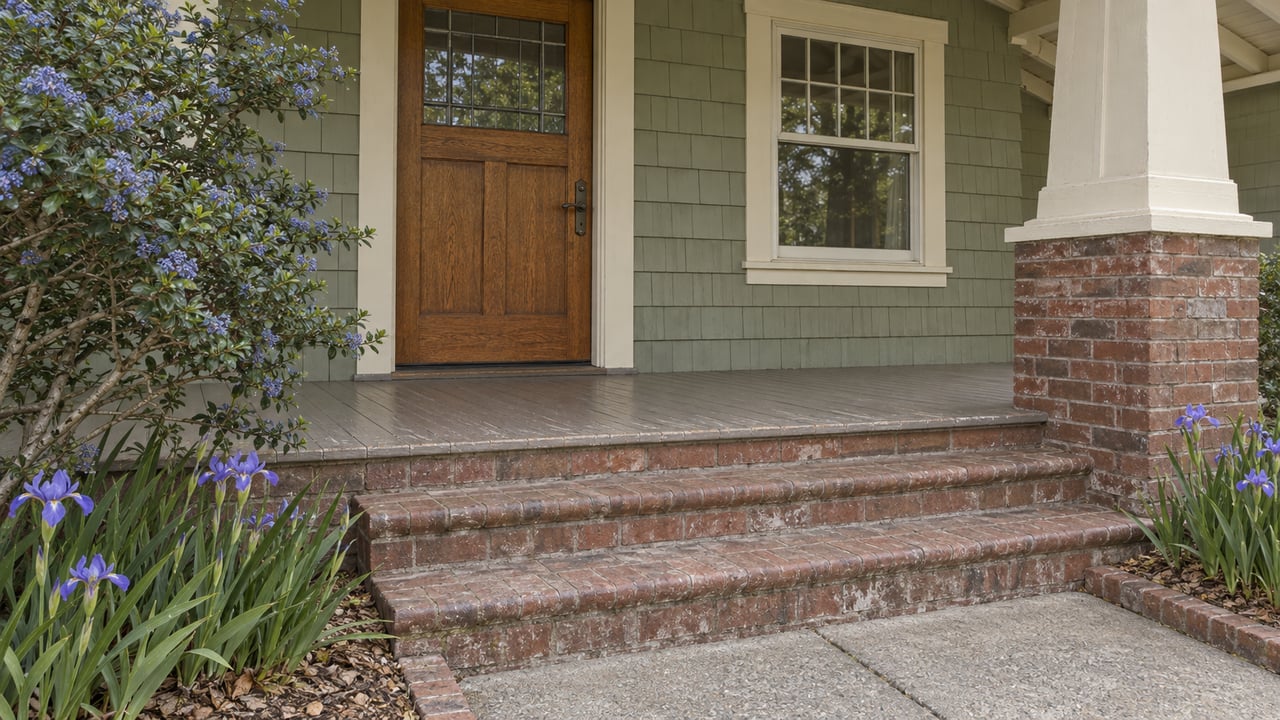
If you are touring a Lafayette Square Craftsman or a Harvard Heights foursquare this fall, the house may come with a recorded agreement between the owner and the City of Los Angeles. That agreement can keep the property tax bill well below what the purchase price would otherwise produce. It also commits the next owner to restoration work that someone else scheduled. At the end of October 2026, the City's application page still read "New Applications Temporarily on Hold." While that pause lasts, the only way to own a West Adams home with this tax structure is to buy one that already has a contract.
A buyer in that position is taking on a house and a contract at the same time, and the seller set the contract's terms before the buyer showed up.
The friction shows up in escrow
The City's own FAQ answers the ownership question plainly:
"None, the contract runs with the property. It is important that a seller of a Mills Act Contract property fully discloses the document to prospective buyers and identifies work completed and remaining and the timeframe in which outstanding items need to be completed. Buyers should also ensure they are aware of and in agreement with their obligations under the contract."
That passage comes from Los Angeles City Planning's Mills Act FAQ. State law backs it up. Government Code section 50281 makes the contract binding on successors in interest, who take on the original owner's rights and obligations.
Every contract lists specific rehabilitation and restoration work. The City expects owners to finish that work plan, and they can coordinate with the Office of Historic Resources to change the order of the items. State law requires compliance inspections every five years. If an owner is found in breach, the Office of Historic Resources sends a letter, and Building and Safety may issue an Order-To-Comply. If the violations aren't fixed, the Cultural Heritage Commission can recommend that City Council cancel the contract. A contract canceled for breach carries a fee of 12.5 percent of the property's current fair market value, measured as if no restriction applied, under Government Code section 50286.
On a historic house, that means the seller's progress on the work plan matters as much as the inspection report. A roof the seller promised to restore in year four of the contract becomes your item in year five.
Why the formula survives the sale
A sale normally triggers reassessment. Property Tax Rule 461 states the general rule that real property is reappraised when it is purchased or changes ownership. For a Mills Act property, the LA County Assessor values these homes every year by comparing three numbers and enrolling the lowest one:
- The restricted value, calculated with a capitalization rate set out in Revenue and Taxation Code section 439.2.
- The current market value.
- The factored base year value, which is the Proposition 13 number.
When the house sells, the California State Board of Equalization's Mills Act guidance says a new base year value is set as of the sale date. It also says that value "typically" will be greater than the restricted value "and hence will not be enrolled." The new base year exists so the assessor can keep running the three-way comparison, and so there is a figure ready if the contract ever enters nonrenewal. The same guidance says enforceably restricted historical property "is not subject to supplemental assessment," so the mid-year catch-up bill that usually follows a purchase does not apply to the contracted portion.
The restricted value does not come with a guarantee. The Assessor says Mills Act properties are reassessed every year, so their taxes can go up or down as market conditions change, and the restricted value "can be considerably lower" than the other two values. Section 439.2 caps the restricted valuation at the lesser of the other two values, unless a party to the contract expressly prohibits that valuation, so the Proposition 13 comparison stays in place.
What Lafayette Square's numbers looked like
The City's 2022 Mills Act Program Assessment Report, prepared by Chattel, Inc. with AECOM, includes a property-by-property list of contracts using 2019 values. These figures are seven years old, so read them as a picture of how the formula behaved, not as a forecast for any house on the market now.
Among the single-family contracts in the Lafayette Square HPOZ in 2019:
| What the 2019 list showed | Enrolled value | Trended value | Reduction |
|---|---|---|---|
| A contract at the high end | $387,000 | $1,938,000 | about 80% |
| Another near the high end | $345,000 | $1,310,904 | about 74% |
| A contract with no reduction | $519,326 | $519,326 | none |
The last row shows the three-way comparison at work. On a house with a low Proposition 13 base, perhaps because one owner held it for decades, the restricted value may not be the lowest of the three, and the contract produces no reduction even though its obligations still apply. The report also found that Lafayette Square had the fourth-largest Mills Act savings of any HPOZ in 2019. Once a buyer pays today's price, the new base year value goes up, and that makes it more likely the restricted value becomes the lowest of the three.
Citywide, the report counted 948 contracts and more than $20 million in annual property tax savings. It also listed Jefferson Park, Adams-Normandie, University Park, and Harvard Heights among the HPOZs with low participation, which it flagged for outreach, and it named the West Adams Heritage Association as a stakeholder partner. Those blocks have many eligible houses and relatively few contracts, and the pause has kept that number where it was.
How the pause happened, and what is still only proposed
On May 23, 2023, City Council adopted a motion, Council File 23-0331, introduced by Councilmember Marqueece Harris-Dawson. It directed City Planning to prepare recommendations and ordinance amendments for the program. City Planning released a draft in March 2025 and noted that it had not accepted applications for new contracts while that work was underway. The draft was presented to the Cultural Heritage Commission on April 24, 2025. City Planning's program update says staff are "continuing to refine" the recommendations for the Commission, and that Mills Act fees will be updated through a broader study of Planning fees, given the City's fiscal year 2025-26 budget challenges.
Several of the draft's proposals matter to anyone buying an existing contract:
- Creating capacity in the program by not renewing some existing contracts, based on geographic equity or on how long a contract has been in effect
- Prioritizing new applications from lower-resource areas
- Eliminating the program-wide annual cap on the City's unrealized property tax revenue
- Tightening compliance and enforcement provisions
All of these remain proposals. Under current state law, a contract adds a year automatically on each anniversary unless someone gives notice of nonrenewal. An owner must give that notice 90 days before the renewal date and the City 60 days before, and a contract under notice stays in effect for the rest of its term. If you are buying an older contract, the length of its remaining term is worth understanding.
Adding on changes the math
Many West Adams buyers look at the back of the lot before they look at the kitchen. On a contracted property, new construction is assessed differently. The City's FAQ says additions must meet the Secretary of the Interior's Standards and that the Assessor uses "a blended approach to valuation." New construction gets less of a reduction, and "properties with significant new construction may not benefit from tax savings." The Board of Equalization adds that new construction not covered by the existing contract, using a detached garage as its example, is subject to supplemental assessment.
Checking a specific house
The contract is a public record. Government Code section 50282 requires a copy to be recorded with the County Recorder within 20 days. City Planning's ZIMAS guide explains how to look up a property by address or parcel number, open its Historic Preservation information, and use the "Mills Act" tab to see whether it is under contract. Once you know a house has a contract, ask the seller for the recorded document, the work plan, and a record of which items are finished and which are still due. Those are the three items the City's FAQ names.
FAQ
Can I apply for a Mills Act contract on a West Adams house I already own? Not right now. The City's application page says new applications are temporarily on hold while it prepares ordinance amendments for City Council.
Is there a value limit? For new applications, the City lists an assessed-value threshold of $1.5 million for single-family homes. Properties above it need an exemption application and a Historic Structure Report. That threshold applies to new applications, not to contracts already in place.
Which West Adams houses are eligible at all? City Planning lists two kinds: Historic-Cultural Monuments and properties that contribute to an HPOZ. A house that sits in an HPOZ without contributing status does not qualify on that basis.
This post is general information, not legal, tax or financial advice. A Mills Act contract affects every house differently, so confirm the terms and the tax effect for a specific property with a real estate attorney and a tax professional before you rely on them.
If you're weighing a historic West Adams home and want to know whether it carries a contract, and what that contract asks of its next owner, Your Spot LA can pull the record and go through the work plan with you before you write an offer. Find Your Spot, or get a valuation on a contracted home you're thinking of selling.