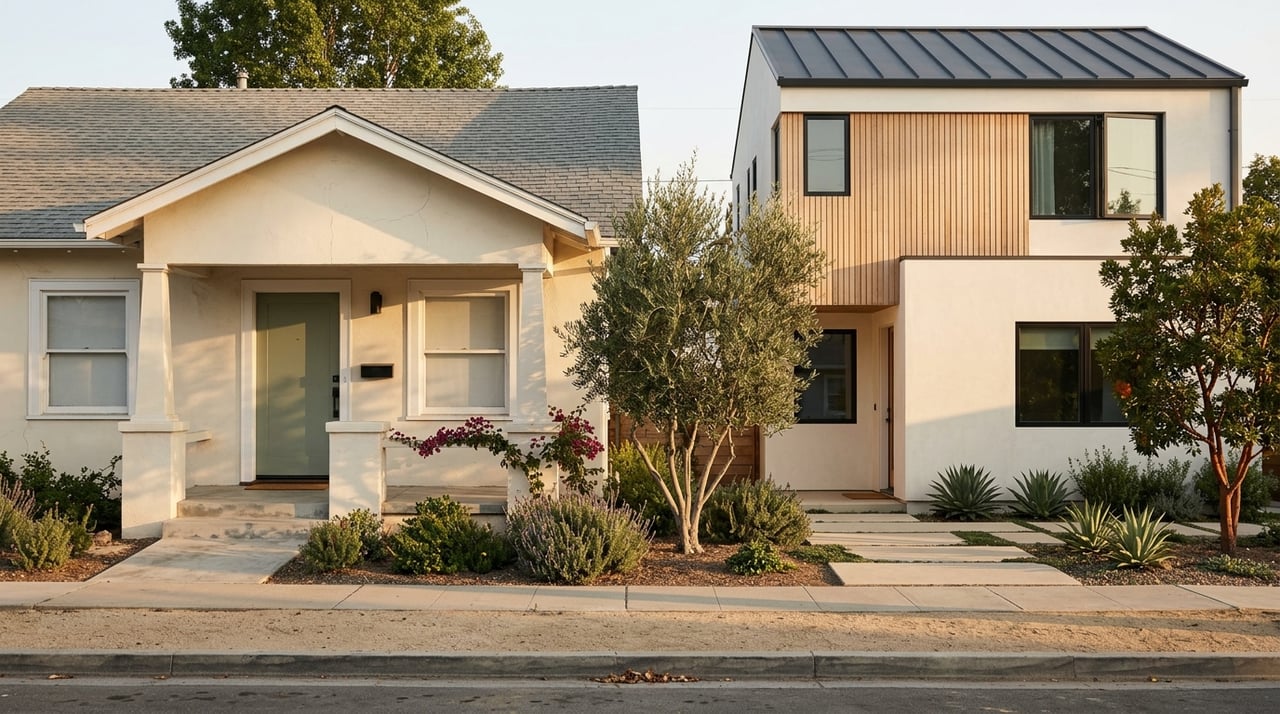
If you have started touring homes in Glassell Park, you have probably noticed one thing fast: there is no single “Glassell Park house.” On one block, you might see an early bungalow with a porch and original details, and around the corner, a newer three-story home with a rooftop deck and attached garage. That mix can feel exciting, but it can also make it harder to know what fits your life best. This guide will help you understand the most common Glassell Park home styles, what they tend to offer, and what to look for as you tour. Let’s dive in.
Why Glassell Park Feels So Varied
Glassell Park is one of Los Angeles’ older neighborhoods, originally subdivided in 1907. City planning materials describe a streetscape shaped by Craftsman homes, hillside lots, and lower-rise commercial corridors, with many homes dating from the early 1900s through the early 1940s.
That long timeline matters when you are house hunting. Instead of one dominant housing type, you get layers of architecture shaped by different eras, lot conditions, and topography. In practice, that means your options can range from compact cottages to Spanish-style homes, ranch houses, hillside properties, and newer infill construction.
Craftsman Bungalows in Glassell Park
Craftsman bungalows are among the most recognizable home styles in Glassell Park. They are typically one to one-and-a-half stories tall, with low-pitched roofs, wide eaves, exposed rafter tails or knee braces, and open front porches supported by square or tapered posts.
For many buyers, the appeal is obvious. These homes often have a warm street presence, strong original character, and a layout that connects the house to the porch and yard through windows and outdoor living spaces. If you love older Los Angeles architecture, this is often the style that pulls you in first.
What a bungalow layout usually feels like
Inside, Craftsman bungalows often have more room-based floor plans than newer homes. Instead of one large open great room, you are more likely to see distinct living, dining, and bedroom spaces.
That can feel cozy and charming, but it also creates tradeoffs. If you want a very open kitchen-family room setup, you may need to think about renovation potential instead of expecting that layout on day one.
What buyers should watch for
Glassell Park design guidance favors preserving original front entrances, porches, windows, and rooflines. Because of that, the cleanest updates often happen at the rear of the house or through carefully designed upper-level additions that do not overpower the original street-facing facade.
If you are touring a bungalow, it helps to ask a few simple questions:
- How much original detail is still intact?
- Has the kitchen or bath already been updated?
- Is there room for a rear addition if you want more square footage later?
- Does the front of the home still read clearly as the original structure?
Hipped-Roof Cottages and Early Small Homes
Hipped-roof cottages are another common part of Glassell Park’s early housing fabric. They share some of the same appeal as bungalows, including older detailing and smaller-scale charm, but they may feel a bit simpler in form.
For buyers, the tradeoff is often similar. You get character, age, and a stronger sense of neighborhood continuity, but you may also get less open-plan living than you would in newer construction. These homes can be a strong fit if you value architecture and are comfortable making thoughtful updates over time.
Spanish Colonial Homes and Courtyard Living
Spanish Colonial homes are another key part of the local mix. These homes typically feature stucco walls, low-pitched gabled roofs with clay tile, asymmetrical massing, round arches, wood casement windows, and occasional courtyard or patio access.
Compared with a bungalow, a Spanish Colonial home can feel more enclosed from the street. The facade may have smaller openings and a more inward-looking expression, but that often gives way to a strong indoor-outdoor feel once you move into a courtyard, side patio, or rear yard.
Why buyers are drawn to Spanish-style homes
For many people, the appeal is the atmosphere. Stucco walls, arches, and tiled rooflines create a distinct sense of character that feels different from wood-sided bungalow architecture.
From a living standpoint, these homes often reward you once you move past the front facade. If a house opens gracefully to a patio or courtyard, the outdoor space can become a real extension of the interior.
Shared-lot and bungalow-court setups
Glassell Park also includes examples of older shared-lot housing, including bungalow-court style properties. In these settings, homes may be organized around common outdoor space rather than separated by large private yards.
That is important to understand when you tour. Outdoor space in older properties is not always a traditional backyard. Sometimes the value is in a shared courtyard, a side garden, or a community-oriented layout that feels different from a standard single-lot setup.
Ranch Homes and Mid-Century Appeal
Mid-century ranch homes bring a different rhythm to the neighborhood. These are generally single-story homes with low-pitched roofs, wide eaves, larger grouped windows, more open floor plans, attached garages, and rear patios or gardens.
If early bungalows feel more compartmentalized, ranch homes often feel more relaxed and open. Buyers who want better daylight, easier flow, and more casual indoor-outdoor living often find this style especially appealing.
What makes ranch homes practical
In day-to-day life, ranch homes can feel more intuitive for modern living. The lower profile, larger windows, and stronger connection to rear patios or gardens often create a brighter interior and a more flexible common area.
That does not mean every ranch is fully updated. But as a home type, it often starts closer to what many current buyers want in terms of layout and livability.
Hillside Homes and View-Oriented Layouts
Glassell Park is shaped by hills and canyons, and that has a direct impact on housing. The local specific plan emphasizes scenic vistas, privacy, light, ventilation, and usable open space, all of which become especially important on sloped parcels.
For buyers, hillside homes often come with a different set of tradeoffs than flat-lot properties. You may gain views, more dramatic light, and a stronger sense of separation, but you may also get less traditional yard space and a more vertical floor plan.
What hillside living can look like
Some newer hillside development in Glassell Park shows this clearly. A local example highlighted three-story homes with stacked windows, glass doors opening to balconies, a small patio, and a lower-level bonus room.
That kind of design tells you a lot about the local hillside pattern. Instead of a broad backyard and single-level layout, you may be looking at stacked living spaces, outdoor areas spread across balconies or terraces, and a house designed to capture light and views.
Questions to ask on a hillside tour
When you are considering a hillside home, focus on how the lot actually lives. A parcel may look large on paper but offer limited flat, usable outdoor area.
Ask questions like:
- How much of the lot is usable day to day?
- Where do the main living spaces get their light?
- Is the outdoor space mostly a patio, balcony, or deck?
- How does the home balance privacy with views?
New Builds and Small-Lot Homes
Newer infill homes add another layer to Glassell Park’s housing mix. In Los Angeles, the Small Lot Subdivision Ordinance created a fee-simple ownership product on smaller lots, resulting in homes that often look and function like townhomes while still being independently owned.
In practical terms, newer Glassell Park homes often prioritize vertical living. That can mean detached three-story homes with attached garages, rooftop decks, and shared or compact outdoor areas instead of a large ground-level yard.
What newer infill usually offers
Recent local projects help show the pattern. One 37-home development on Fletcher Drive included detached homes with two- and three-bedroom layouts, two-car garages, rooftop decks, and shared outdoor gathering areas.
If you want move-in-ready finishes, open-plan living, and newer systems, this category may be a strong fit. Just know that the tradeoff is often less flexibility for future expansion and a different relationship to outdoor space.
How new homes fit the neighborhood
Glassell Park design guidance asks new homes to maintain front-facing entrances, use windows along all facades, keep parking to the rear where feasible, and use scale, roof form, and materials that fit the surrounding area. So while newer homes may feel more contemporary inside, they are still expected to respond to neighborhood context.
That matters if you want something newer without losing the sense of place that makes Glassell Park distinctive.
Comparing Layout, Light, and Outdoor Space
If you are deciding between an older character home and a newer build, it helps to simplify the comparison. In Glassell Park, the biggest differences usually come down to layout, daylight, and what “outdoor space” really means.
| Home type | Layout | Light | Outdoor space |
|---|---|---|---|
| Craftsman bungalow | More compartmentalized rooms | Porch depth and front-facing windows shape daylight | Front porch, rear yard |
| Hipped-roof cottage | Similar to bungalow, compact rooms | Moderate natural light through traditional openings | Small yard or porch |
| Spanish Colonial | Often more enclosed from the street | Smaller openings at front, stronger patio connection | Courtyard, patio, rear yard |
| Ranch home | More open and single-level | Larger grouped windows | Rear patio or garden |
| Hillside home | Often vertical and stacked | Strong light and views through larger glazing | Balcony, terrace, small patio |
| New small-lot home | Vertical, open-plan feel | Larger windows, sliders, stacked glazing | Rooftop deck, balcony, shared open area |
How to Tour Homes More Clearly
When every house style comes with a different set of strengths, the goal is not to find the “best” architecture. The goal is to find the best fit for how you actually live.
As you tour Glassell Park homes, try to focus on these practical questions:
- Do you want character that may call for future updates?
- Do you need open-plan living now?
- Would you rather have a porch, a courtyard, or a rooftop deck?
- Is parking conveniently placed?
- If the home is older, can it be expanded without overwhelming the original front facade?
Those questions tend to clarify things quickly. A charming bungalow and a newer small-lot home may both be appealing, but they support daily life in very different ways.
What This Means for Buyers and Sellers
For buyers, understanding these housing types can save time and sharpen your search. You can focus less on broad labels and more on the real-life tradeoffs between character, layout, light, parking, privacy, and outdoor space.
For sellers, this mix is part of what makes Glassell Park so compelling. A thoughtful marketing strategy should explain not just the number of bedrooms or square footage, but why a home’s architectural style, lot type, and indoor-outdoor flow matter in this neighborhood. That is especially true in a place where a front porch, hillside balcony, or preserved roofline can shape buyer interest in a big way.
If you are buying or selling in Glassell Park, having a team that understands architecture, neighborhood context, and presentation can make the process feel much more grounded. To talk through your next move, connect with Your Spot LA.
FAQs
What home styles are most common in Glassell Park?
- Glassell Park is known for Craftsman bungalows, hipped-roof cottages, Spanish Colonial homes, ranch houses, hillside properties, and newer small-lot or infill homes.
What do Craftsman bungalows in Glassell Park usually look like?
- Craftsman bungalows in Glassell Park are usually one to one-and-a-half stories with low-pitched roofs, wide eaves, exposed rafter details, and open front porches.
What is the main difference between older Glassell Park homes and newer builds?
- Older homes usually offer more character and compartmentalized layouts, while newer builds often provide more open-plan, vertical living with garages, balconies, or rooftop decks.
What kind of outdoor space do Glassell Park homes have?
- Outdoor space varies by home type and may include a front porch, rear yard, courtyard, patio, balcony, rooftop deck, or shared common area.
What should buyers ask when touring a hillside home in Glassell Park?
- Buyers should ask how much of the lot is actually usable, where the natural light comes from, what type of outdoor space is included, and how the home balances views with privacy.
Can older homes in Glassell Park usually be expanded?
- Many older homes may offer expansion potential, especially through rear additions or carefully set-back upper-level additions, but local design guidance favors keeping the original front-facing character readable.