If you want to live in Los Angeles with less time behind the wheel, Exposition Park deserves a closer look. This part of South LA puts rail, museums, parks, dining, and major civic destinations within a compact area, which can make daily life feel more connected and more manageable. If you are wondering whether car-light living near the E Line is actually practical here, this guide will walk you through what the neighborhood offers, where the tradeoffs are, and what kind of home search makes sense. Let’s dive in.
Why Exposition Park Works for Car-Light Living
Exposition Park is not built around a spread-out suburban pattern. It is a 160-acre state-managed campus just south of Downtown Los Angeles, anchored by a concentrated group of major destinations including the California African American Museum, the California Science Center, the Natural History Museum, the Coliseum, BMO Stadium, the EXPO Center, and the Rose Garden.
That concentration matters because it changes how you move through the neighborhood. Instead of driving between far-flung errands or activities, you are often working within a smaller radius where walking, transit, and bike trips can play a real role in your routine.
The broader area also supports that urban feel. ZIP code 90037 has 65,482 residents living in 2.9 square miles, with 17,615 households and 18,745 housing units, which points to a dense, close-in neighborhood where daily life can be less car-dependent than in many other parts of LA.
How the E Line Fits Daily Life
The E Line is the backbone of a car-light lifestyle in Exposition Park. Metro identifies both Expo Park/USC and Expo/Vermont as E Line stations, and the institutions around the park reinforce how close those stops are to the neighborhood’s main destinations.
The California African American Museum says Expo Park/USC is about a five-minute walk from its front door. The California Science Center says it is about 0.2 miles across the Rose Garden from Expo Park/USC, and the Natural History Museum points to both Expo/USC and Expo/Vermont as the closest stations.
That is the key difference here. In some neighborhoods, transit is technically nearby but not central to everyday life. In Exposition Park, rail is woven into the basic geography of the area.
Walking Around Exposition Park
For many buyers, car-light living starts with a simple question: can you comfortably walk to places you would actually use? In Exposition Park, the answer can often be yes, especially if your routine includes cultural destinations, open space, casual meals, and trips along the park campus.
The amenity mix is unusually concentrated. CAAM notes that the California Science Center food court is open to the public, that The Fields dining option is across the park at the stadium, and that Mercado La Paloma is about half a mile away, or roughly a 10-minute walk, with independent shops, nonprofit offices, events, and a food court with Ethiopian, Oaxacan, and Thai options.
That kind of short-distance variety is what makes a neighborhood feel usable without a car every day. You are not relying on one single destination. You have a cluster of places that can support lunch, a casual outing, or a weekend plan without requiring a drive.
Bikes Add More Flexibility
If you want to stretch your range beyond walking distance, biking adds another layer of convenience. Metro Bike Share’s Exposition Park ride guide starts at Expo/Vermont and uses six nearby Bike Share stations on a two-mile loop that is described as flat and mostly in bike lanes, bikeways, and pedestrian access areas.
The guide also uses a protected bike lane on South Figueroa. USC’s bike program adds that there are at least four Metro Bike Share stations around campus and that the area is surrounded by LA County bike paths.
For a car-light household, this is a meaningful plus. A flat, fairly short ride network can make it easier to connect to transit, reach nearby destinations, or simply build more flexibility into your week.
Free and Low-Cost Destinations Matter
One overlooked benefit of car-light living is not just how you get around, but how often you actually use the neighborhood around you. Exposition Park has a strong advantage here because several major attractions are free or include many free experiences.
CAAM says admission is free. The California Science Center says general admission is always free, and NHM Commons says it includes many free experiences.
That lowers the barrier to enjoying the neighborhood regularly. Instead of saving local destinations for special occasions, you can make them part of your normal routine, whether that means an afternoon museum stop, a walk through the grounds, or meeting a friend nearby.
What the Weekly Rhythm Really Feels Like
The best version of Exposition Park living is not about eliminating cars completely. It is about reducing how often you need one and being more intentional about when you use it.
On a typical weekday, that could mean walking to the E Line, meeting someone for lunch near the park, biking a short loop, or spending time at one of the museums. On weekends, the neighborhood’s civic and cultural anchors can make it easier to stay local instead of planning every outing around a drive.
This is also where the neighborhood’s density works in your favor. In a compact district, everyday decisions can feel simpler because more of your routine can happen in the same general area.
The Main Tradeoff: Event-Day Traffic
There is one important caveat to keep in mind. Exposition Park is home to major venues, and that means traffic patterns can shift quickly on event days.
USC’s game-day guidance says Exposition Boulevard, Figueroa Street, Martin Luther King Jr. Boulevard, and Flower Street can see closures and diversions after games, and it specifically recommends public transportation. The Natural History Museum also advises allowing extra travel time when nearby Coliseum events are happening.
So the most accurate way to think about the area is this: Exposition Park supports a car-light lifestyle well, but it is not friction-free every day of the year. If you live here, part of your routine will be learning the event calendar and planning around surges.
What Kind of Housing You Will Find
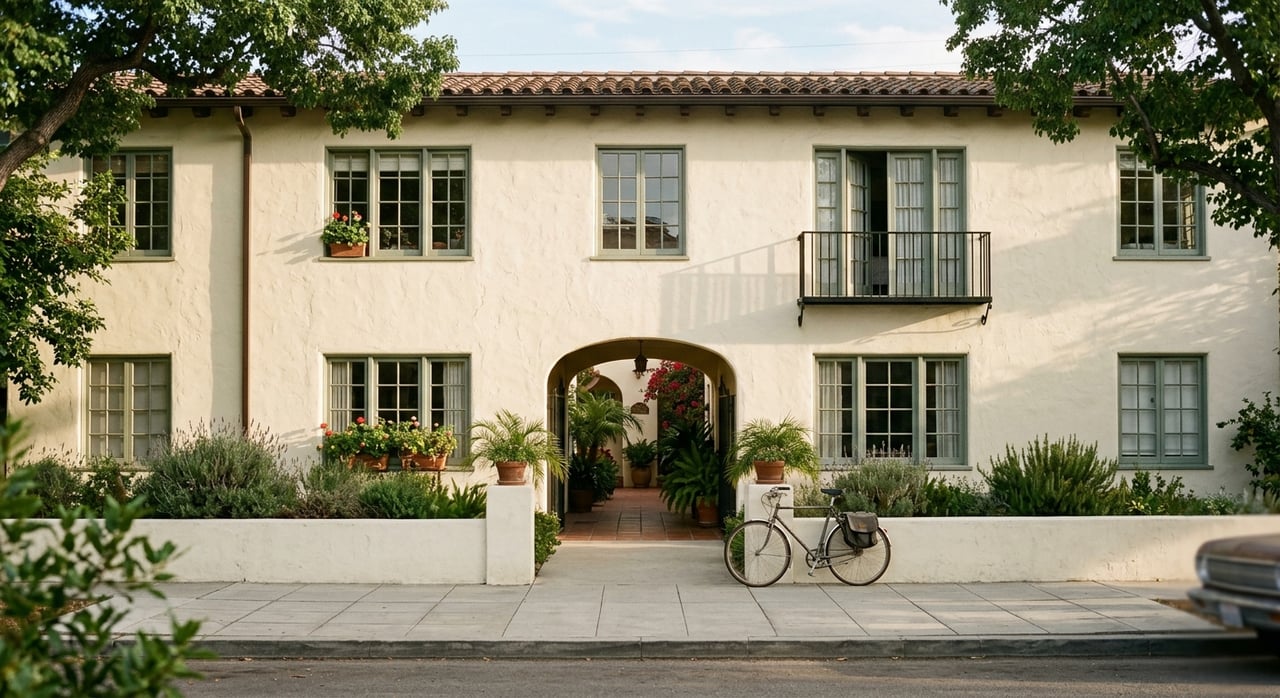
Your home search should match the neighborhood’s actual building pattern. Exposition Park is not primarily a high-rise district. The housing stock is more mixed and generally lower-rise, which can appeal to buyers who like character, smaller-scale buildings, and a more established street grid.
LA City Planning describes the Exposition Park Square Historic District as a concentration of multi-family property types including duplexes, fourplexes, bungalow courts, and apartment houses, along with a small number of single-family residences. The district was also marketed historically for its proximity to streetcar lines, and its physical character is described as flat, gridded, and lined with sidewalks, parkways, consistent setbacks, and mature street trees.
For buyers, that suggests a neighborhood where the built environment supports walking in a very practical way. The streetscape itself can make short trips feel more natural, especially when blocks are relatively connected and the terrain is flat.
Who Exposition Park May Fit Best
This area may appeal most if you want a close-in LA neighborhood where transit access is part of daily life, not just a backup plan. It can also be a strong fit if you are open to modest condos, low-rise multi-unit housing, or older housing stock with more neighborhood texture than a newer tower district.
The numbers help set expectations. Census data for 90037 shows 77% renter occupancy, 51% single-unit structures, and a median owner-occupied home value of $666,400. Commute patterns show 64% drive alone, 14% carpool, 12% use public transit, 2% walk, 1% bicycle, and 5% work from home, with a mean commute time of 35.8 minutes.
That mix is why the best label here is car-light, not car-free. Plenty of people still drive, but the neighborhood offers enough density, transit access, and nearby amenities to support a lower-car routine for the right buyer.
Tips for Buying Near the E Line
If you are considering a home in Exposition Park, it helps to focus on the details that affect your daily rhythm, not just the unit itself.
Here are a few smart things to look for:
- Distance to Expo Park/USC or Expo/Vermont
- A comfortable walking route, not just a short map distance
- Access to nearby bike infrastructure or Bike Share stations
- Building type and how it fits your maintenance preferences
- Event-day traffic and street closure patterns nearby
- Everyday amenities you would realistically use during the week
When you tour homes, try to picture the trips you make most often. Think about how you would get to transit, where you would grab lunch or coffee, and how the block feels on foot.
Why Neighborhood Fit Matters Most
A car-light lifestyle is never just about transportation. It is really about whether a neighborhood supports the way you want to live.
In Exposition Park, the strongest case comes from the combination of rail access, a flat and connected street pattern, concentrated cultural destinations, and a housing stock that still reflects older LA patterns of neighborhood living. If that mix matches your priorities, this area can offer a more grounded and flexible way to live in the city.
If you are exploring Exposition Park or comparing it with other central LA neighborhoods, working with a team that understands neighborhood fit, housing character, and daily livability can help you narrow in on the right move. If you want guidance on buying or selling in Los Angeles, connect with Your Spot LA.
FAQs
Is Exposition Park a good neighborhood for car-light living near the E Line?
- Yes. The area has E Line access through Expo Park/USC and Expo/Vermont, plus a concentrated mix of cultural destinations, dining, and bike connections that can make daily life less car-dependent.
What amenities can you walk to in Exposition Park?
- Within the area around the park, you can access destinations like CAAM, the California Science Center, the Natural History Museum, the Rose Garden, stadium-area dining, and Mercado La Paloma about half a mile away.
What is the biggest downside of living near Exposition Park?
- The main tradeoff is event-day congestion. Streets around the park can see closures, diversions, and heavier traffic during major games and events.
What types of homes are common in Exposition Park?
- The area includes a mix of low-rise housing types such as duplexes, fourplexes, bungalow courts, apartment houses, and a smaller number of single-family homes.
Is Exposition Park better described as car-free or car-light?
- Car-light is the better description. Transit, walking, and biking are realistic parts of daily life here, but many residents still drive and event-day conditions can affect how the neighborhood functions.